
Keeping a home comfortable throughout the year involves more than adjusting the thermostat whenever the temperature changes. Heating and cooling performance depends on the condition of the equipment, airflow through the house, insulation, air sealing, maintenance habits, and even how individual rooms are used. When these elements work together, a home can maintain more consistent temperatures without placing unnecessary demand on its mechanical systems.
Problems often develop gradually. One room starts feeling warmer than another, utility bills creep upward, or equipment begins running longer to reach the desired temperature. These changes can be easy to ignore until they become significant enough to disrupt comfort.
Improving performance starts with understanding what is happening throughout the house. Some problems can be addressed with simple maintenance, while others require equipment repairs or upgrades. Taking a whole-home approach helps homeowners spend money where it will make the greatest difference while supporting reliable comfort in every season.
Identify Comfort Problems Before Making Upgrades
Before replacing equipment, identify exactly what is not working. Walk through the home while the system operates and compare temperatures from room to room. Notice whether airflow from supply vents feels weak, certain spaces remain uncomfortable, or equipment cycles on and off unusually often. New noises, odors, and unexpected energy-use increases are also worth documenting.
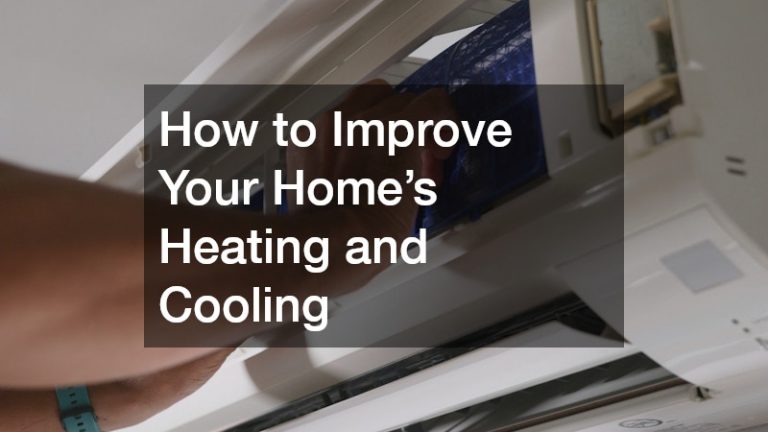
Start with simple checks. Make sure supply registers and return vents are not covered by furniture, rugs, or curtains. Inspect the air filter and replace it if it is dirty. Look at accessible equipment for obvious signs of moisture, debris, or damage, but avoid opening electrical or mechanical components.
When simple adjustments do not solve the problem, qualified HVAC contractors can perform a more detailed evaluation. Professional testing may reveal duct leakage, incorrect airflow, thermostat problems, worn components, or equipment that is not properly sized for the building.
Choosing an HVAC company should involve more than comparing estimates. Homeowners can check licensing and insurance requirements, ask about experience with the equipment involved, and review warranty terms. A written estimate should clearly describe the recommended work.
Most importantly, determine the cause before purchasing a solution. Replacing equipment will not necessarily correct a comfort problem caused by poor insulation, damaged ducts, or inadequate airflow.
Improve Cooling Performance Before Summer Temperatures Peak
Cooling systems operate under their greatest strain during hot weather, making spring a useful time to address maintenance. Begin by checking the filter and keeping the outdoor unit clear. Plants, leaves, grass clippings, and other debris can restrict airflow around outdoor equipment.
Inside the home, make sure vents remain open and unobstructed. Closing multiple registers in an attempt to redirect cooling can interfere with system airflow rather than improve it. If certain rooms remain consistently warm, the cause may involve ducts, insulation, windows, or system balancing.
Professional air conditioning services can address issues that are not appropriate for homeowner troubleshooting. A technician may inspect electrical connections, condensate drainage, refrigerant-related performance, airflow, and mechanical components. Early evaluation is particularly useful when a system makes unusual sounds, runs almost constantly, or struggles to reach the thermostat setting.
For older or repeatedly failing equipment, replacement may eventually make more sense than continued repairs. Before ac installation, proper sizing should be a priority. Bigger equipment is not automatically better. An oversized unit may cool quickly and shut off before adequately managing indoor humidity, while an undersized unit may run for long periods without maintaining comfort.
Home layout, insulation, windows, ductwork, and local climate should all be considered when selecting replacement equipment.
Consider Zoned Cooling for Hard-to-Condition Spaces
Some areas of a house are naturally more difficult to heat and cool than others. Finished attics, converted garages, additions, workshops, basements, and rooms far from central equipment may have different temperature needs from the main living areas.
A ductless system can provide targeted temperature control without extending existing ducts into the space. Mini split installation may therefore be worth considering for additions or rooms where modifying a central duct system would be difficult or inefficient. Depending on the equipment, these systems may provide both heating and cooling.
Correct sizing remains important. Square footage is only one factor. Windows, insulation, ceiling height, exterior exposure, occupancy, and typical room use can influence the amount of heating or cooling required.
Placement matters as well. Indoor units need locations that allow conditioned air to circulate effectively, while outdoor equipment requires sufficient clearance and appropriate positioning. Once installed, filters should be cleaned according to manufacturer guidance, and outdoor components should remain clear of vegetation and debris.
Zoning can be particularly useful when parts of a house are used at different times. Conditioning occupied spaces independently can provide more control without requiring every room to operate at exactly the same temperature.
Evaluate Efficient Options for Year-Round Temperature Control
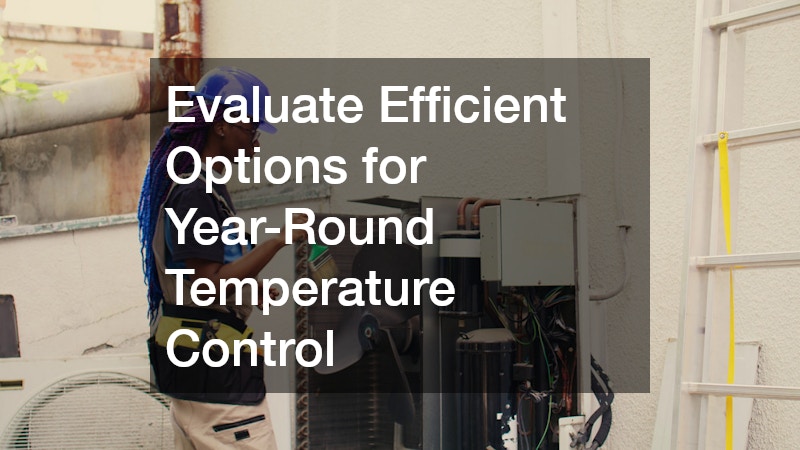
Homeowners planning major equipment upgrades may want to consider systems capable of providing both heating and cooling. A Heat pump moves thermal energy rather than generating heat through the same process used by traditional combustion equipment. During warmer weather, the process operates in the opposite direction to cool the home.
Modern systems are available in several configurations, including ducted and ductless designs. The right choice depends on the building, climate, existing infrastructure, and household comfort expectations.
Efficiency ratings are useful when comparing equipment, but they do not tell the entire story. A highly efficient system can still perform poorly when incorrectly sized or installed in a home with substantial air leakage. Insulation, duct condition, thermostat operation, and equipment setup all affect real-world performance.
A professional load calculation can help determine the capacity a particular house actually requires. This process considers factors such as square footage, insulation, windows, orientation, and local temperatures rather than simply matching the size of the previous equipment.
Climate should also influence equipment selection. Homeowners in areas with prolonged cold weather should discuss cold-weather performance and whether any supplemental heating strategy is appropriate for the property.
Prepare Your Heating System Before Cold Weather Arrives
Waiting until the first freezing night to test heating equipment can turn a minor problem into an inconvenient emergency. Run the system before cold weather arrives and pay attention to how quickly the home warms, whether temperatures remain consistent, and whether unusual sounds or odors occur.
Replace a dirty filter and make sure registers are not blocked. If the furnace frequently starts and stops, struggles to reach the thermostat setting, or produces unfamiliar noises, professional inspection may be appropriate.
Routine heating maintenance can include evaluating safety controls, burners, electrical components, airflow, and venting where applicable. The exact tasks depend on the type of system, so manufacturer recommendations provide a useful maintenance baseline.
Age alone does not determine whether equipment needs replacement. Repair history, efficiency, reliability, comfort, and the cost of needed work should all be considered. When furnace installations become necessary, correct sizing is essential. A larger furnace can cycle too frequently, create uneven temperatures, and place unnecessary stress on components.
Fuel availability, efficiency ratings, ductwork condition, ventilation requirements, and long-term operating plans should also influence equipment selection. Planning before failure provides more time to compare options rather than making a rushed decision during severe weather.
Address Electrical Problems That Affect Home Comfort
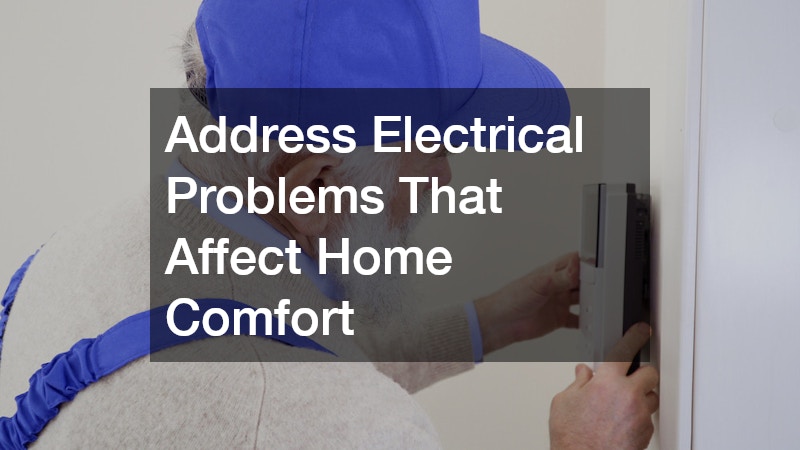
Modern heating and cooling equipment depends heavily on the home’s electrical system. Thermostats, motors, control boards, compressors, pumps, and other components require reliable electrical connections and appropriate circuit protection.
Pay attention to warning signs. Frequently tripped breakers, flickering lights when equipment starts, damaged outlets, burning odors, or systems that unexpectedly lose power should not be ignored. Repeatedly resetting a breaker without determining why it trips can allow an underlying problem to continue.
Professional electrical repair may be needed when wiring, breakers, disconnects, or other electrical components show signs of trouble. Electrical work can create serious shock and fire hazards, making it an area where DIY experimentation is particularly risky.
Electrical capacity should also be evaluated when major mechanical equipment is being added or replaced. Certain upgrades may require dedicated circuits or changes to existing electrical infrastructure.
Homeowners planning several improvements can benefit from discussing electrical requirements early in the process. Discovering that a panel or circuit needs modification after equipment has already been selected can complicate installation and scheduling.
Keep Hot Water Reliable and Energy Use Under Control
Hot water may operate independently from space heating and cooling, but it remains an important part of household comfort. Showers, laundry, cleaning, and dishwashing all depend on a reliable supply.
Homeowners should periodically inspect accessible areas around the unit for moisture, corrosion, or other visible changes. Fluctuating temperatures, reduced hot water capacity, unusual noises, or leaks can indicate that attention is needed.
Professional water heater service can help determine whether a problem involves a heating element, burner, thermostat, valve, sediment buildup, or another component. Maintenance requirements vary by system, so homeowners should follow manufacturer guidance rather than applying the same procedure to every unit.
When repeated repairs, corrosion, leakage, or declining performance become concerns, water heater replacement may be worth discussing. Selecting a new system requires considering household demand, available energy sources, installation requirements, and available space.
Tank and tankless designs operate differently and may require different infrastructure. Instead of choosing based solely on advertised efficiency, homeowners should consider their typical hot water usage and the full installation requirements. Addressing small leaks and performance changes early can also reduce the chance of an unexpected loss of hot water.
Reduce Heating and Cooling Losses Throughout the House
Mechanical equipment can only do so much if conditioned air continually escapes from the home. Improving the building envelope can reduce heating and cooling demand while making indoor temperatures more consistent.
Check weatherstripping around exterior doors and accessible windows for deterioration. Attics are another important area because inadequate insulation and air leakage can contribute to substantial temperature differences. Depending on the house, additional problem areas may exist around penetrations for plumbing, wiring, recessed fixtures, or attic access points.
Ductwork also deserves attention. Leaky ducts can release conditioned air into attics, crawl spaces, or other unconditioned areas before it reaches living spaces. Ducts running through hot or cold areas may also benefit from appropriate insulation.
During summer, window coverings can reduce heat entering through direct sunlight. Exterior shading can be particularly helpful on windows receiving intense afternoon sun.
Airflow inside the house matters too. Keep return grilles and supply registers clear instead of placing large furniture directly in front of them. Before increasing equipment capacity to solve uncomfortable rooms, determine whether the real problem involves air leakage, insulation, ducts, or solar heat gain.
Use Thermostat Settings and Daily Habits More Effectively
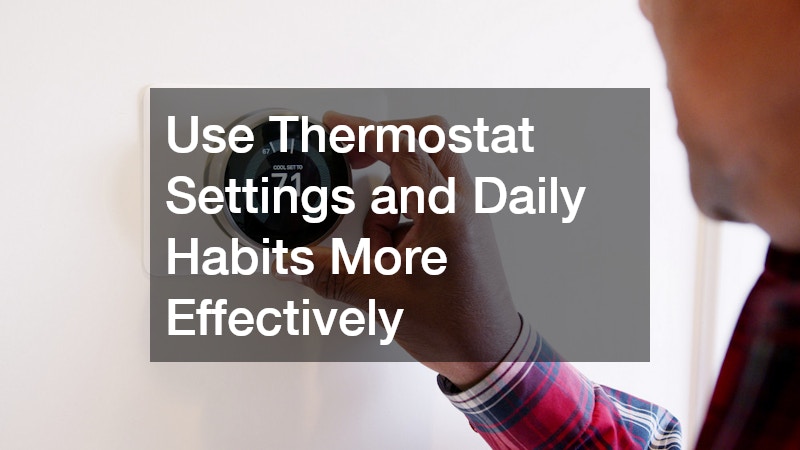
Small changes in everyday behavior can reduce unnecessary system operation. Start by choosing reasonable thermostat settings and maintaining them consistently. Setting an extremely low temperature does not make most cooling systems lower the indoor temperature faster.
Programmable and smart thermostats can help households create schedules around normal routines. Temperature settings can be adjusted when occupants are sleeping or away, then returned to comfortable levels when needed. Avoid schedules that require equipment to overcome unnecessarily extreme temperature changes.
Ceiling fans can improve perceived comfort by moving air across the skin. Because fans cool people rather than empty rooms, turn them off when the room is unoccupied. Seasonal fan direction can also be adjusted where recommended by the manufacturer.
During hot weather, close blinds or shades on windows receiving strong sunlight. Cooking and laundry can also add indoor heat, so shifting heat-producing activities away from the hottest part of the day may help.
The goal is not to tolerate uncomfortable conditions. Instead, use simple household habits to support the mechanical system rather than making it compensate for avoidable heat gain or energy waste.
Take a Whole-Home Approach to Lasting Comfort
Improving heating and cooling is rarely about finding one piece of equipment that solves every problem. Comfortable homes depend on appropriately sized mechanical systems, good airflow, adequate insulation, controlled air leakage, safe electrical infrastructure, consistent maintenance, and sensible everyday habits.
Start with the problems that have the greatest effect on comfort. A persistently hot bedroom may need airflow or insulation improvements rather than a larger cooling system. Rising energy use could point to maintenance needs, building-envelope problems, or aging equipment. Understanding the cause makes it easier to choose an improvement that provides meaningful value.
Preventive attention also gives homeowners more control. Equipment can be inspected before peak seasons, repairs can be planned before failure, and replacement options can be evaluated without the pressure of an emergency.
Most homes do not need every improvement at once. Gradual, informed changes can make a significant difference. By looking at the entire house rather than focusing only on the thermostat, homeowners can create a more dependable, efficient, and comfortable indoor environment throughout the year